



Implants vs. Bridges: A Guide for Linden Patients
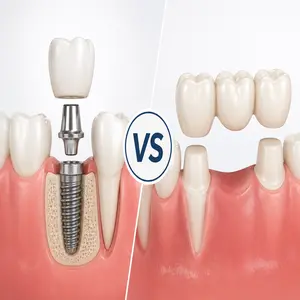
Missing a tooth is not just a cosmetic concern. When a gap stays open, nearby teeth can slowly drift and the bite can change, which may create new places for food and plaque to collect. If you are weighing your options in Linden, two of the most common solutions are a dental implant or a dental bridge.
This decision guide compares both options side by side, with practical, patient-focused pros and cons. If you are researching dental implants in Linden and wondering whether a bridge might be simpler, start here.
Our team at Center of Dental Services, led by Myung Hae Hyon D.D.S, helps patients choose tooth replacement based on comfort, long-term maintenance, and how each option affects the surrounding teeth and gums.
TL;DR - A Fast Way to Choose Between an Implant and a Bridge
Both implants and bridges can restore chewing and appearance, but they work very differently. The right choice depends on the health of the teeth next to the gap, bone support, timeline, and how you want to maintain the result over time.
- Choose an implant when you want a stand-alone tooth replacement that does not rely on neighboring teeth.
- Choose a bridge when you prefer a non-implant approach or when an implant is not recommended.
- Think long-term: implants help preserve bone in the missing-tooth area; bridges rely on support teeth that must be kept healthy.
- Maintenance differs: bridges require careful cleaning under the false tooth; implants require gum and implant maintenance similar to a natural tooth.
- Ask about your specific anatomy: bone levels, bite forces, and the condition of adjacent teeth often decide the best route.
What Is the Real Difference Between an Implant and a Bridge?
Dental Implant (One-Tooth Replacement)
A dental implant replaces the tooth root with a small post that supports a crown. Because the replacement is anchored in the jaw, it can function more like a natural tooth and typically does not depend on the teeth next to it.
Dental Bridge (Traditional Tooth Replacement)
A traditional bridge replaces the missing tooth with a false tooth (pontic) that is held in place by crowns on the adjacent teeth (abutments). Those support teeth usually need to be reshaped so the bridge can fit securely.
Decision Guide: Which Option Fits Your Situation in Linden?
1) Longevity and "What Happens 5 to 15 Years From Now?"
Many patients choose implants because they are designed to be a long-term solution and can help preserve bone where the tooth is missing. A bridge can also last for years, but its long-term success is closely tied to the health of the two supporting teeth and the ability to keep the area under the bridge clean.
2) Comfort and Chewing Confidence
Implants often feel like a "single tooth" because they stand alone. Bridges can feel stable too, but they spread chewing forces across the supporting teeth. If you clench or grind, or if your bite puts heavy load on the replacement area, your dentist may discuss how that affects each choice.
3) Impact on Nearby Teeth and Bone
A key benefit of an implant is that it can replace a tooth without reshaping the teeth next to the gap. A traditional bridge, by design, uses adjacent teeth as anchors and typically involves removing some tooth structure to fit crowns.
Also, bone tends to change over time in areas without a tooth root. Implants can help maintain the bone in that spot because the implant serves as a substitute root.
4) Timeline and Appointments
Bridge treatment is often completed in a shorter overall timeline because it typically does not require the same healing time as implant placement. Implants may take longer from start to finish due to planning and healing needs, even though the daily experience for the patient can still be manageable.
5) Cleaning and Maintenance at Home
Bridges require cleaning under the pontic (the false tooth) where food can collect. Many people use floss threaders or special cleaning tools. Implants are cleaned like a natural tooth (brushing and flossing), with added attention to gum health around the implant.
Dental Implants in Linden: When Implants Tend to Be the Better Fit
An implant may be a strong option when you want a stand-alone replacement and the neighboring teeth are healthy or minimally restored. It is also often preferred when patients want to avoid relying on adjacent teeth for support.
- You want to replace one tooth without reshaping the teeth next to it.
- You want a tooth replacement that supports the jawbone in the missing-tooth area.
- You want a solution that can feel closer to a natural tooth in everyday chewing.
- You are willing to follow a longer treatment timeline if needed.
If bone support is a concern, your dentist may discuss whether bone grafting is recommended before or during implant planning.
When a Bridge Might Make More Sense
A bridge can be a practical option when an implant is not recommended, or when you prefer a non-implant approach. It may also be considered when the adjacent teeth already need crowns, since a bridge uses crowns as its anchors.
- You prefer to avoid implant surgery or you have a medical reason to choose a different approach.
- The neighboring teeth already have large restorations and may benefit from crowns.
- You want a solution that can often be completed in fewer overall months.
- You are committed to cleaning under the bridge daily.
If you are exploring multiple tooth-replacement options, our restorative care page explains additional ways to rebuild function and appearance.
A Note on Aesthetics: How Veneers Can Complement Tooth Replacement
Sometimes, people who search implants vs. bridges are also thinking about the overall look of their smile, not just the missing tooth. If your front teeth have chips, discoloration, or uneven shapes, veneers may be an option after the tooth replacement plan is stable.
If that sounds like you, you can learn more on our page about dental veneers in Linden. (We typically focus on restoring function first, then refine cosmetics so everything matches.)
Our Experience: A Common Turning Point We See in Implant vs. Bridge Decisions
In our day-to-day conversations with patients, one of the biggest "aha" moments happens when people realize that a bridge usually involves treating the neighboring teeth, even if those teeth are healthy today. For some patients, preserving those adjacent teeth is the deciding factor. For others, a bridge still makes sense because it aligns better with their comfort level, timeline, or existing dental work.
FAQs
It depends on your goals and the health of the neighboring teeth. An implant replaces the tooth root and typically avoids altering adjacent teeth. A bridge can be a good choice when an implant is not ideal medically or when a faster, non-surgical approach is preferred. The best next step is an exam so your dentist can evaluate bite forces, gum health, and the condition of the teeth next to the gap.
Many patients report that implants feel very close to a natural tooth because the crown is supported by an implant in the jaw, not by neighboring teeth. Bridges can also feel stable, but the chewing forces are shared by the teeth that support the bridge. Comfort is individual, and factors like bite alignment and gum health can make a difference.
Longevity varies with oral hygiene, bite forces, and maintenance. In general, implants are designed as a long-term solution, while bridges may need replacement over time. Your dentist can discuss what affects lifespan in your case and what maintenance habits protect your investment.
Not everyone needs a bone graft. If the jawbone has thinned or there is not enough bone volume where the tooth is missing, a bone graft may be recommended to support implant placement. An exam and imaging determine what is needed, and your dentist will explain why grafting is or is not part of your plan.
A traditional bridge generally requires shaping the adjacent teeth to hold crowns, even if those teeth are healthy. In some cases, other bridge designs may be possible, but the best approach depends on your bite, tooth position, and long-term goals. Your dentist will review the pros and cons before you decide.
Yes. Tooth replacement focuses on function and stability first, but cosmetic options like veneers may be considered afterward to refine shape and color in the visible smile zone. Your dentist can help sequence treatment so the replacement tooth and any cosmetic improvements look consistent.
Related Reading
- Dental implants treatment
- Bone grafting
- Restorative care
- Porcelain dental veneers
- Top signs you should see a dentist right away
Conclusion: The Best Choice Is the One That Protects Your Smile Long-Term
If you are deciding between an implant and a bridge, focus on what each option means for the teeth next to the gap, how you will maintain it at home, and the long-term impact on your bite and jawbone. A short, personalized evaluation can clarify which option is most predictable for your specific mouth.
Schedule a Tooth Replacement Consultation
If you are considering dental implants or a bridge and want a clear recommendation, call Center of Dental Services in Linden at 908-925-8110 to schedule a visit.
You can also reach us through our contact page to request an appointment.